Leave Us a Message
Contact us now to get professional waste recycling solutions and quotation!


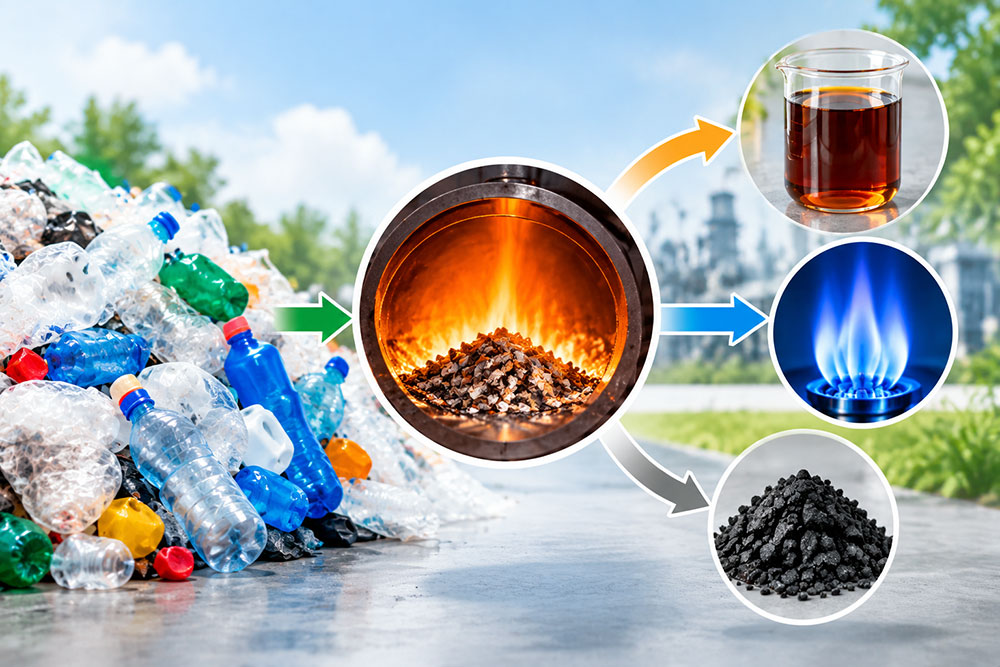
Through a high-temperature, oxygen-free process, plastic pyrolysis breaks down the long-chain polymers in plastics into smaller molecules, yielding products such as pyrolysis oil, combustible gas, and carbonaceous solids.
So, which types of plastic are suitable for pyrolysis? And how does a plastic pyrolysis production line actually work?
Not all plastics are suitable for direct processing in pyrolysis equipment. In general, PE, PP, PS, and certain types of ABS are the most common feedstocks for pyrolysis.
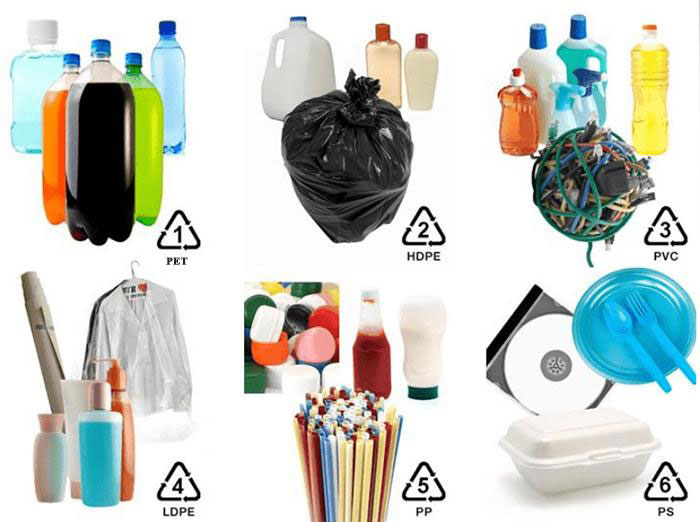
These plastics contain a high proportion of organic hydrocarbons, which—under the appropriate process conditions—can yield high-quality liquid products.
A particularly critical step in plastic pyrolysis is the sorting of feedstock. If certain types of plastics are fed directly into a standard pyrolysis system, it can not only compromise product quality but also cause significant issues for the equipment and environmental protection processes.
PET is typically found in items like beverage bottles and food packaging. Compared to PE or PP, it is actually not very well-suited for pyrolysis into oil. If there is too much PET in the feedstock, it will negatively affect the overall process, so it is best to separate it out beforehand.
PVC requires even greater caution. It contains chlorine, which can readily generate acidic gases—such as hydrogen chloride (HCl)—at high temperatures. These gases not only corrode equipment but also complicate downstream exhaust gas treatment.
A complete plastic pyrolysis process can be broadly divided into several steps:
① Feedstock pretreatment
First, sort the waste plastic to remove PVC, PET, and other impurities; then, depending on the specific requirements, proceed with washing, dewatering, and shredding to prepare the material for continuous feeding.
② High-Temperature Pyrolysis
The pretreated plastic is fed into a pyrolysis reactor, where it is heated in an oxygen-free or oxygen-deficient environment. As the temperature rises, the long molecular chains within the plastic gradually break down into smaller hydrocarbon molecules.
Factors such as pyrolysis temperature, heating rate, and reaction duration all influence the final product; therefore, process parameters must be adjusted according to the specific raw material used.
③ Condensation and Product Collection
The high-temperature oil and gas produced during pyrolysis enter a condensation system. Upon cooling, a portion condenses into liquid pyrolysis oil, while the lighter, non-condensable gases are recovered for use as combustible gas.
Solid residues generated during the reaction process are also collected.
A major benefit of plastic pyrolysis is its ability to transform waste plastic into several valuable resources:
In particular, recycling the combustible gas is highly effective for cost reduction; when utilized properly, it decreases the system’s reliance on external energy sources.
Plastic pyrolysis is far more than just “heating plastic to turn it into oil.” It is, in fact, a comprehensive system encompassing feedstock pre-treatment, the pyrolysis reaction itself, condensation and recovery, energy utilization, and environmental protection measures.
Gomine offers customized plastic pyrolysis solutions tailored to specific plastic feedstocks, processing capacities, and project requirements—helping clients effectively transform waste plastic into a valuable resource.