Leave Us a Message
Contact us now to get professional waste recycling solutions and quotation!

Glass is very common in our lives, from glass bottles in the kitchen to glass doors and windows used in home renovations. Many things don’t have to be thrown away as trash after use. With proper sorting, many glass products can be recycled and reused after processing.
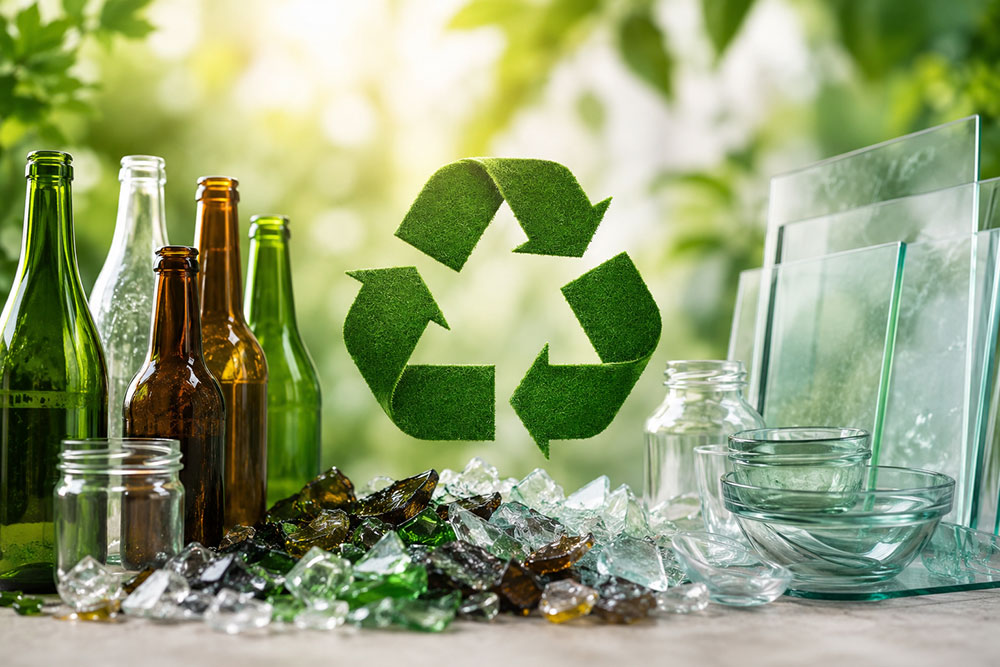
Beer bottles, juice bottles, soda bottles, and mineral water bottles are all common types of recyclable glass in daily life.
After being crushed, cleaned, and sorted, these bottles can be reused as glass raw materials.
Honey jars, jam jars, condiment jars, pickle jars, etc., are also common glass products.
Especially in households and the food service industry, a considerable amount of this type of glass packaging is generated daily; collecting it collectively yields good recycling value.
While some glassware, such as ordinary glasses and bowls, can be recycled, not all glass can be mixed together.
Therefore, glass recycling requires sorting based on its actual material composition.
Simply put:
Proper initial sorting can reduce the impact of mixing different types of glass on subsequent processing.
A significant amount of glass waste is generated during the renovation process, including:
This type of glass is usually large and may contain metal frames, sealant, or other materials. Recycling requires disassembly and sorting, followed by appropriate processing methods based on the glass type.
Many people think that glass recycling is simply breaking glass, but complete waste glass processing usually involves multiple steps.
| Glass Types | Common Sources | Recycling Focus |
|---|---|---|
| Beverage Glass Bottles | Beverages, beer, etc. | Empty and sort residual liquid. |
| Food Glass Bottles | Honey, jam, condiments. | Remove food residue. |
| Ordinary Glass Tableware | Households, catering industry. | Note material classification. |
| Window and Door Glass | Decoration, construction. | Remove attached materials. |
| Decorative Glass | Home decoration, commercial decoration. | Classify according to material. |
Starting with routine sorting, and progressing to professional crushing, sorting, and resource recovery, waste glass can be transformed from “garbage” into valuable recyclable resources.
Gomine is committed to providing environmentally friendly processing equipment and solutions for various waste recycling projects, helping more companies achieve efficient resource recycling and reuse.