Leave Us a Message
Contact us now to get professional waste recycling solutions and quotation!


In the recycling industry, shredders are the core equipment for breaking down waste into smaller pieces. Single-shaft shredders and twin-shaft shredders are the two most widely used types, but many users easily get confused when selecting one.
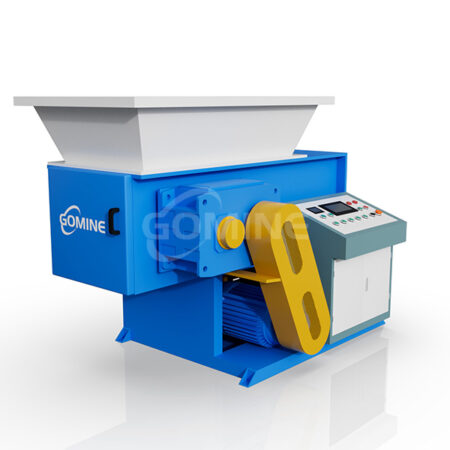
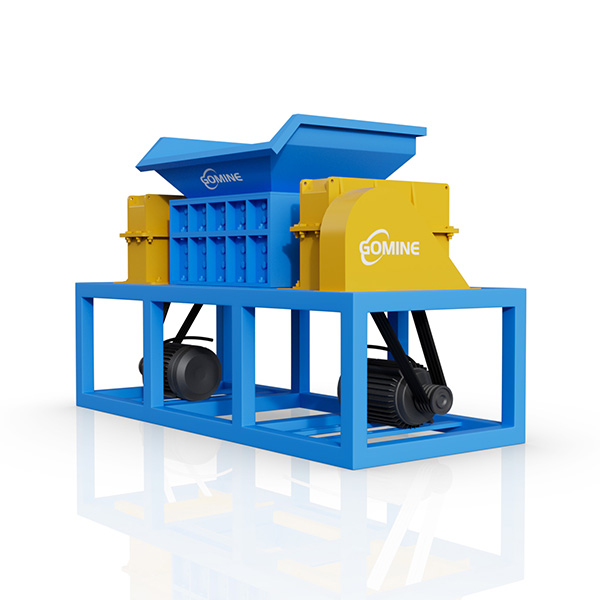
Below, we provide a simplified comparison from several key dimensions.
One rotating cutter roller works in conjunction with a fixed blade to cut the material, with a screen underneath. The material must be repeatedly shredded until it is smaller than the screen openings before it can fall through.
Two cutter shafts rotate in opposite directions, with the blades interlocking to tear, pull, and squeeze the material. Generally, there is no screen; the shredded material falls directly through the screen.
plastic films, woven bags, ton bags, plastic bottles, waste paper, wooden pallets, and rubber scraps. These materials are relatively soft, thin, and resilient.
car bumpers, appliance casings, metal cans, bulky waste (mattresses, sofas), construction waste containing nails, and waste tires. These materials are relatively hard, thick, large in volume, and may contain hard objects.
⚠️ Note: Single-shaft shredders are susceptible to damage from hard objects (metal, stones); dual-shaft shredders are susceptible to damage from soft objects (film, ropes easily entangle the blade shaft).
Produces uniform and controllable output, with particles typically ranging from 20 to 120 millimeters. Because of the screen, particles smaller than the mesh size cannot pass through. Suitable for direct connection to pellet mills or washing lines.
Produces coarser output, typically 30–300 millimeters, and may contain some larger pieces. Without screen limitations, its advantages include high speed and no clogging, making it suitable for coarse crushing and volume reduction pretreatment.
Processing capacity: 0.5–25 tons/hour, power: 15–132 kW. Because the material needs to be repeatedly shredded before screening, the unit energy consumption is relatively high. The cutter shaft speed is moderate (80–120 rpm), and the torque is moderate.
Processing capacity: 1–60 tons/hour, power: 30–400 kW. Shreds and discharges the material in one pass, resulting in lower unit energy consumption. The cutter shaft speed is low (20–60 rpm), but the torque is high, capable of “biting” hard materials.
There’s no absolute good or bad between single-shaft and dual-shaft crushing; the key is suitability. Single-shaft crushing excels in “precision,” while dual-shaft crushing excels in “power.” If the material is complex, a combination of “dual-shaft coarse crushing + single-shaft fine crushing” can balance efficiency and effectiveness.
If you’re considering buying a shredder, choose Gomine; we’ll customize a solution just for you.